What is Polysomnography?
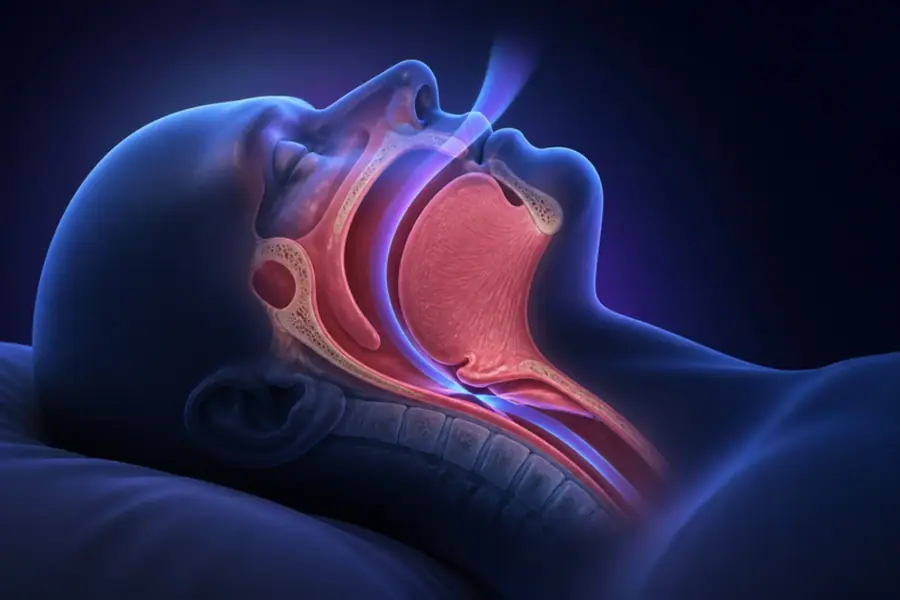
Sleep is a complex process in which the brain and body pass through distinct stages — light sleep, deep sleep and dreaming (REM) sleep — in several cycles each night. Because most sleep disorders appear only while you are asleep, daytime examinations cannot fully reveal them. Polysomnography (PSG) records many body functions simultaneously throughout the night to show the structure of your sleep and any problems that occur during it.
The main signals recorded are:
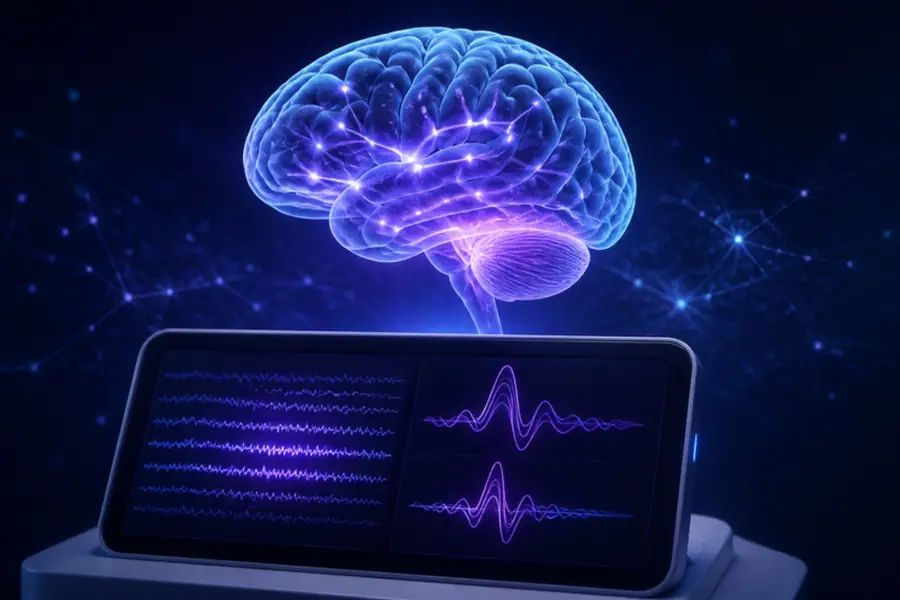
- EEG: brain waves, to identify sleep stages
- EOG: eye movements, to identify REM sleep
- Chin EMG: muscle tone
- Airflow: breathing through the nose and mouth
- Respiratory effort: chest and abdominal belts
- Oxygen saturation: a finger sensor measuring blood oxygen
- ECG: heart rhythm
- Leg EMG: leg movements during sleep
- Snoring, body position and video
A sleep specialist reviews these recordings in detail to determine how long and how efficiently you slept, how much time you spent in each stage, how often sleep was disrupted, how many breathing events occurred, how far your oxygen fell and whether there were abnormal movements or behaviours.
Why sleep stages matter
Sleep moves through roughly 90-minute cycles of light sleep (N1, N2), deep sleep (N3) and REM sleep. Deep sleep is important for physical recovery; REM sleep for learning, memory and emotional balance. Disorders such as sleep apnea break up deep and REM sleep, which explains why people wake unrefreshed after long hours in bed.
When is it requested?
- Snoring, breathing pauses and daytime sleepiness (suspected sleep apnea)
- Setting the right CPAP or BiPAP pressure (titration)
- Persistent daytime sleepiness despite treatment
- Irresistible daytime sleep attacks (suspected narcolepsy — together with a daytime test, the MSLT)
- Acting out dreams, shouting or falling out of bed (REM sleep behaviour disorder)
- Repeated leg jerks and restless sleep
- Abnormal behaviours during sleep such as sleepwalking or night terrors
- Unexplained insomnia when another sleep disorder is suspected
- Night-time episodes that need to be distinguished from epilepsy
Who needs Polysomnography?
Polysomnography can be performed in anyone from children to older adults. The decision is made by a sleep specialist after reviewing your symptoms. Heart disease, lung disease, neurological conditions or a previous stroke are not obstacles — sleep disorders are actually more common in these groups.
Types of study
- Diagnostic polysomnography: a full night to diagnose a sleep disorder and its severity
- CPAP titration: a night with the CPAP device on, to find the ideal pressure
- Split-night study: if severe sleep apnea is found in the first half of the night, CPAP titration is performed in the second half
- Multiple sleep latency test (MSLT): for suspected narcolepsy, a daytime test with several short nap opportunities after the overnight study
Polysomnography in neurological conditions
Sleep disorders are common — and often overlooked — in Parkinson’s disease, dementia, stroke, epilepsy and neuromuscular disease. REM sleep behaviour disorder can be an early sign of Parkinson’s disease; sleep apnea is very common after stroke; and neuromuscular diseases can cause breathing problems at night. In these patients, a sleep study is an important part of neurological care.
How to prepare
- Avoid coffee, tea, cola and energy drinks from the afternoon of the test
- Do not drink alcohol — it alters sleep and breathing
- Try not to nap during the day
- Wash your hair; do not use conditioner, gel or oil
- Remove nail polish or artificial nails from at least one finger (for the oxygen sensor)
- Bring comfortable sleepwear and toiletries
- Take your usual medicines unless told otherwise and bring a list
- Have your evening meal before you arrive
How is Polysomnography performed?
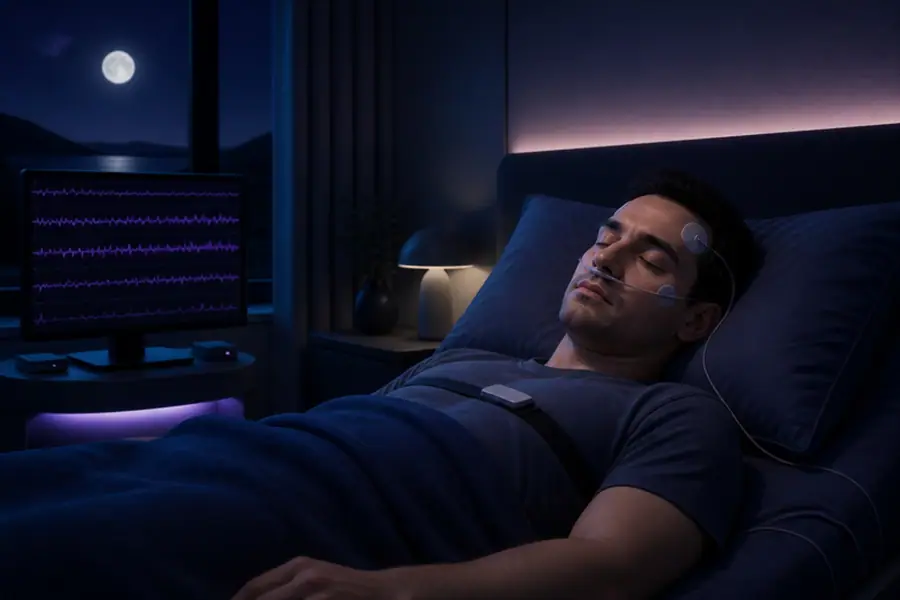
- You arrive at the sleep laboratory in the evening and settle into a private, hotel-style room
- A sleep technologist attaches the sensors: small electrodes on the scalp and face, elastic belts around the chest and abdomen, an airflow sensor at the nose, an oxygen sensor on a finger and electrodes on the legs
- Fitting the sensors takes about 45–60 minutes and is painless
- A few simple calibration steps follow (opening and closing your eyes, deep breaths)
- The lights are turned off and you sleep at your usual time while recording continues all night
- The technologist monitors the recordings and camera from another room and can help if you need the bathroom
- In the morning the sensors are removed and you go home or to work
Many people worry that they will not be able to sleep in a laboratory. In practice, most people sleep enough for a diagnosis, even if not quite as well as at home. Even a few hours of sleep provide valuable information.
Duration, results and your stay in Istanbul
You usually arrive between 20:00 and 21:00 and leave between 06:00 and 07:00. Because the recording is scored in 30-second segments by a sleep specialist, the report takes a few days to prepare.
For international patients, the consultation and polysomnography can be planned into a 2-day stay in Istanbul; if CPAP titration is also needed, a third night can be added. Results and the treatment plan are discussed at a follow-up visit or by video call.
After the test
- After the sensors are removed you can shower and return to normal activities
- The electrode paste washes out easily with warm water and shampoo
- Go through the report with your doctor at your follow-up appointment
What the report includes
Total sleep time, sleep efficiency, time to fall asleep, the proportion of each sleep stage, the number of arousals, the apnea–hypopnea index (AHI), the lowest oxygen level and time spent with low oxygen, snoring, position-related changes, heart rhythm and periodic limb movements. Treatment is planned on the basis of these results.
Risks and safety
Polysomnography is completely painless and safe; no needles or radiation are used. Electrode adhesive may cause mild redness on sensitive skin. Some people find it hard to fall asleep for the first hour with the sensors in place, but this rarely prevents a useful result.
Frequently asked questions about Polysomnography
Does a sleep study hurt?
No. No needles are used; all sensors are stuck to the skin or held with belts. The test is completely painless.
What if I cannot sleep in the lab?
Most people sleep enough for a diagnosis, even if not as well as at home. A few hours of sleep already provide valuable information. Very occasionally the study needs to be repeated.
Can the sleep study be done at home?
Simpler home breathing tests can be used in selected patients, but they do not record brain waves, cannot show sleep structure and may miss mild sleep apnea. A laboratory polysomnography is preferred when other sleep disorders are suspected.
Should I take my medicines on the night of the test?
Take your usual medicines unless your doctor says otherwise. Tell us in advance if you use sleeping pills or sedatives, as adjustments may sometimes be needed.
Can someone stay with me overnight?
Adults usually do not need a companion because a technologist monitors the recording all night. A relative can stay with children or with patients who need care.
When will I get my results?
The recording is scored in detail by a sleep specialist, so the report is usually ready within a few days and is explained at your follow-up appointment.
What is CPAP titration?
It is a sleep study performed while you wear a CPAP device, to find the pressure that prevents breathing pauses. This allows the device to be set specifically for you.
What is the difference between polysomnography and an EEG?
An EEG records only brain waves, usually for a short period. Polysomnography records brain waves together with breathing, oxygen, heart rhythm and movements throughout the night.
This page is for general information only and does not replace a medical consultation. Please consult a physician for diagnosis and treatment. Results vary from person to person.