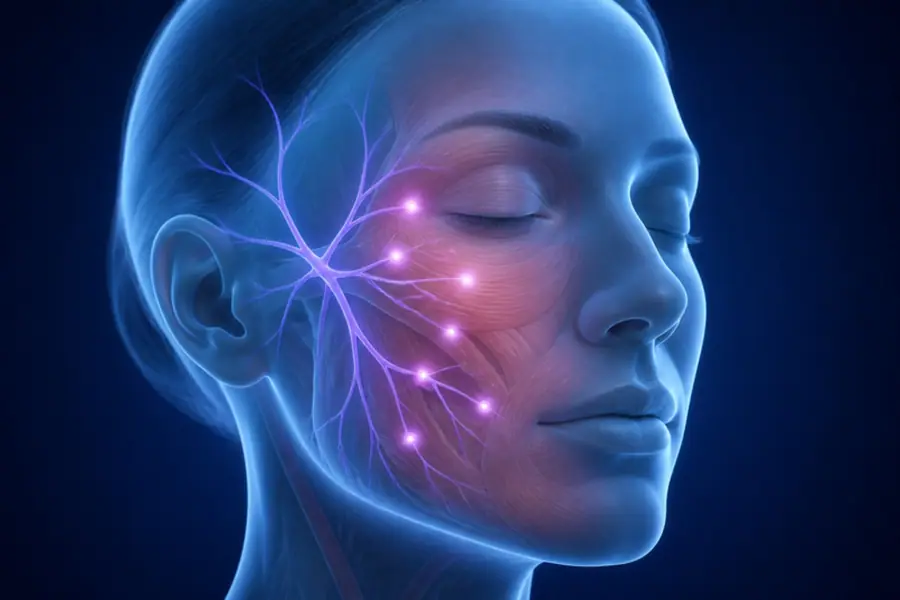
What is Botox for excessive sweating?
Hyperhidrosis means sweating more than is needed to regulate body temperature. In primary focal hyperhidrosis, the sweat glands are normal but overactive due to excessive nerve signals. It usually starts in childhood or adolescence, affects specific areas symmetrically — underarms, palms, soles or face — and often runs in families. It typically does not occur during sleep.
Secondary hyperhidrosis is caused by another condition, such as thyroid overactivity, diabetes, infections, menopause, certain medicines or, rarely, tumours. It is often generalised and may occur at night. These causes must be considered before treatment.
How Botox reduces sweating
Sweat glands are activated by nerves that release acetylcholine. Botox blocks this signal in the treated area, so the sweat glands become much less active. The effect is local; sweating elsewhere in the body continues normally, so temperature regulation is not affected.
Impact on daily life
Hyperhidrosis is not just a cosmetic issue. Wet palms can make handshakes, writing, using touch screens and holding tools difficult. Visible underarm sweat stains can cause embarrassment, limit clothing choices and lead to social anxiety. Many people change clothes several times a day. Effective treatment can improve quality of life considerably.
When to suspect another cause
Sweating that starts in adulthood, affects the whole body, occurs at night, affects only one side, or is accompanied by weight loss, fever, palpitations or other symptoms may indicate secondary hyperhidrosis. In these cases, the underlying cause is investigated before treatment. Some medicines, including certain antidepressants, can also increase sweating.
Which conditions is it used for?
- Sweating that soaks clothing or drips from the hands
- Visible sweat stains and frequent changes of clothing
- Difficulty with handshakes, writing or using devices
- Skin irritation or infections in sweaty areas
- Sweating that occurs regardless of temperature or activity
- Social anxiety and avoidance of situations
Who is Botox for excessive sweating suitable for?
- Primary focal hyperhidrosis of the underarms or palms
- Sweating not controlled by strong antiperspirants
- People who wish to avoid surgery
Botox is not used during pregnancy and breastfeeding, in certain neuromuscular diseases or with infection at the injection site. If secondary hyperhidrosis is suspected, the cause is investigated first.
Who benefits most
The best results are seen in people with clearly localised sweating of the underarms or palms that has been present since adolescence or early adulthood, does not occur during sleep and has not responded to strong antiperspirants. People with generalised sweating or sweating caused by another condition benefit more from treating the underlying cause.
Assessment before the procedure
The diagnosis is based on the history and examination: when sweating started, which areas are affected, whether it occurs during sleep, family history, medicines and other symptoms. Blood tests (thyroid function, blood sugar and others) are performed if a secondary cause is suspected. A simple starch–iodine test may be used to map the area of sweating before injection.
How is Botox for excessive sweating performed?
- The area of excessive sweating is marked, sometimes with a starch–iodine test
- The skin is cleaned; for the palms, numbing cream, ice or nerve blocks can be used for comfort
- Small amounts of Botox are injected just under the skin in a grid pattern
- Underarm treatment takes about 15–20 minutes; palms take a little longer
- You can go home immediately
Comparison with other treatments
- Antiperspirants with aluminium chloride: first choice for mild cases; may irritate the skin
- Iontophoresis: a mild electrical current through water, effective for palms and soles, but requires regular sessions
- Oral medicines: reduce sweating throughout the body but can cause dry mouth, blurred vision and constipation
- Botox: a local effect for months with few side effects; needs to be repeated
- Surgery (sympathectomy): permanent, but carries a significant risk of compensatory sweating elsewhere on the body
Procedure time and your stay in Istanbul
The reduction in sweating begins within a few days and is complete within about two weeks. The effect usually lasts four to twelve months — often longer in the underarms than in the palms. Treatment can be repeated when sweating returns.
For international patients, the consultation and treatment can be completed in one day in Istanbul.
Many people choose to plan their treatment before the summer months or before important events such as weddings, exams or job interviews, when excessive sweating is particularly troublesome.
After the procedure
- Avoid hot baths, saunas and intense exercise for 24 hours
- Do not massage the injected area on the day of treatment
- You may resume using antiperspirant the next day
- Note when sweating returns to plan the next session
Skin care between sessions
Even after successful treatment, good skin care helps: wear breathable fabrics such as cotton, change socks regularly, use antiperspirant on untreated areas and keep the skin dry to prevent irritation and infections. Iontophoresis can be combined with Botox for the hands and feet.
Possible side effects and risks
Side effects are generally mild: temporary pain or bruising at the injection sites and, after palm injections, temporary weakness of the small hand muscles, which can affect fine grip for a few weeks. Some people notice increased sweating in other areas (compensatory sweating), but this is much less common than after surgery.
Frequently asked questions about Botox for excessive sweating
Is Botox for sweating safe?
Yes. Botox for hyperhidrosis has been used for many years and is generally safe when performed by trained doctors. Side effects are usually mild and temporary.
How long does the effect last?
Usually four to twelve months. The underarm effect often lasts longer than the palm effect.
Does stopping sweating in one area harm the body?
No. Only a small area is treated, and the rest of the body continues to sweat normally to regulate temperature.
Are palm injections painful?
The palms are more sensitive than the underarms. Numbing cream, ice or nerve blocks are used to make the procedure more comfortable.
Can Botox treat sweaty feet?
Yes, Botox can also be used for the soles of the feet, although the injections are more uncomfortable and the effect may be shorter.
Will my hands become weak after the injections?
Some people notice mild, temporary weakness of fine grip after palm injections, which usually resolves within a few weeks.
What other treatments are available?
Strong aluminium chloride antiperspirants, iontophoresis for the hands and feet, oral medicines and, in selected cases, surgery (sympathectomy). Botox is often chosen when antiperspirants are not enough and surgery is not desired.
Why is a medical assessment needed?
To confirm primary hyperhidrosis and exclude secondary causes such as thyroid disease, diabetes or medication side effects, which require different treatment.
Can I travel immediately after the treatment?
Yes. You can travel the same day. Avoid saunas and very hot environments for 24 hours.
Does the effect become weaker with repeated treatments?
In most people, the effect remains similar with repeated sessions. Spacing the sessions appropriately helps to maintain effectiveness.
Is the treatment suitable for teenagers?
Primary hyperhidrosis often starts in adolescence. Treatment options are discussed individually with the young person and their parents, starting with the simplest measures.
Can I use deodorant after the treatment?
Yes, from the next day. Many people find they need much less antiperspirant after Botox.
This page is for general information only and does not replace a medical consultation. Please consult a physician for diagnosis and treatment. Results vary from person to person.