What is Botox for migraine?
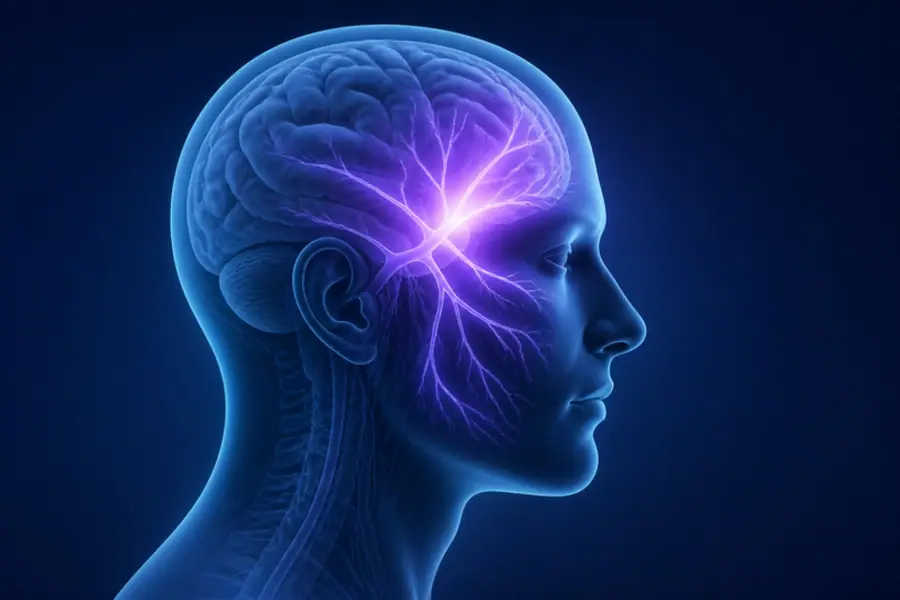
Botulinum toxin is a purified protein that neurologists have used for decades to treat muscle spasms. In chronic migraine its benefit goes beyond relaxing muscles: it reduces the release of pain-signalling substances such as CGRP from sensory nerve endings in the head and neck. Over time, this calms the over-sensitive trigeminal pain system that keeps chronic migraine going.
The treatment was proven effective in large clinical trials (the PREEMPT studies) and is now part of international chronic migraine guidelines. Unlike cosmetic Botox, migraine Botox follows a standard medical protocol with specific muscles, doses and injection points, which is why it should be planned and given by a neurologist.
Botox does not “cure” migraine. Its goal is to reduce how often and how badly attacks occur, to cut down on painkillers and to improve quality of life. The effect lasts a few months, so the injections are repeated at regular intervals.
How does Botox work in migraine?
In chronic migraine the brain’s pain system is in a constant state of alert, so even small signals from nerves in the scalp and neck can start an attack. Botulinum toxin enters the sensory nerve endings at the injection sites and reduces the pain messengers they release. Over successive treatments this also helps reverse central sensitisation, which is why the benefit usually grows with the second and third treatment.
Which conditions is it used for?
Migraine Botox is considered in the following situation:
- Headache on 15 or more days a month for more than three months
- At least 8 of those days with migraine features (throbbing pain, nausea, sensitivity to light and sound)
- Significant disruption to work, study and family life
- Frequent painkiller use without adequate relief
Chronic migraine often comes with neck and shoulder tension, poor sleep and medication overuse. Botox works best as part of a complete plan that also addresses these.
Who is Botox for migraine suitable for?
Botox for migraine is usually suitable for:
- Adults with chronic migraine confirmed by a neurologist
- People who have tried at least two or three preventive medicines at an adequate dose and for long enough without enough benefit, or could not tolerate them
- People for whom preventive tablets are unsuitable because of other health conditions
Who should not have it?
- Pregnancy and breastfeeding
- Infection at the injection sites
- Disorders of the nerve–muscle junction such as myasthenia gravis or Lambert–Eaton syndrome
- Known allergy to botulinum toxin
- Episodic migraine (fewer than 15 headache days a month) — Botox is generally not recommended
People with chronic migraine who also have depression, anxiety or sleep problems benefit more when these are treated too. In medication overuse, reducing painkillers is an important part of the plan.
Assessment before the procedure
Before deciding on Botox we carry out a thorough neurological assessment: confirming that the headaches are migraine, how chronic they are and whether medication overuse is present. We review the preventive medicines you have used, at what dose and for how long.
We ask you to bring a headache diary from the last one to three months — this is the baseline against which improvement is measured. Further tests such as an MRI are requested only if needed. We also ask about blood-thinning medicines, certain antibiotics and any history of nerve–muscle disease.
If you are travelling from abroad, send us your diary, medication history and any reports in advance; we can then confirm by video call whether Botox is likely to be suitable before you book your flight.
How is Botox for migraine performed?
The procedure is done in the clinic with you sitting up. No general anaesthetic or sedation is needed. Very fine needles are used to inject small amounts under the skin and into the muscles.
Injection sites
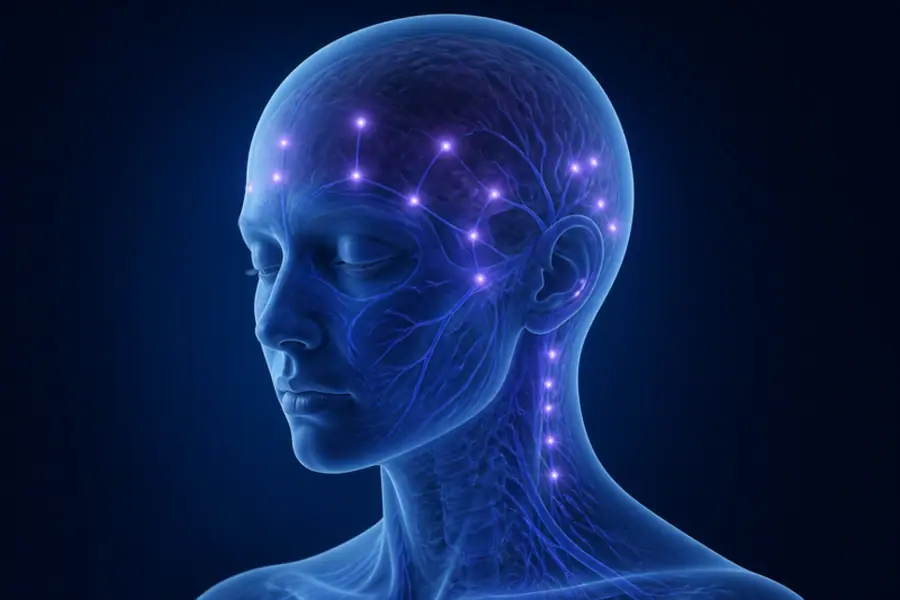
The standard protocol uses 31 injection points across seven muscle areas:
- Forehead (frontalis)
- Between the eyebrows (corrugator and procerus)
- Temples (temporalis)
- Back of the head (occipitalis)
- Neck muscles (cervical paraspinal)
- Upper shoulders (trapezius)
Additional points may be added where your pain is most concentrated.
What does it feel like?
Each injection takes a few seconds and causes a brief sting or burning sensation. Most patients tolerate it easily. Cooling the skin beforehand can make it more comfortable.
When does it start working?
The effect usually begins within 1–2 weeks, but the clearest benefit is often seen after the second or third treatment. That is why the response is assessed after at least two to three cycles (about 6–9 months). If it helps, treatment is repeated every 12 weeks.
How is success measured?
Your headache diary before and after each treatment is compared: fewer headache days, milder attacks and less painkiller use show that Botox is working. If there is no meaningful benefit after two or three cycles, Botox is stopped and other options are considered. Botox can be combined with preventive tablets, CGRP-targeted treatments and occipital nerve blocks.
Procedure time and your stay in Istanbul
The injections take 15–20 minutes; together with the consultation and explanation, allow about an hour. You can return to normal activities the same day.
For patients from abroad, the consultation and Botox can be done on the same day, so a one-day stay in Istanbul is usually enough. The next treatments, every 12 weeks, are scheduled in advance; check-ins in between can be done online.
After the procedure
- Avoid bending forward and do not massage the injection sites for the first 4 hours
- Avoid heavy exercise, sauna and hammam on the same day
- You can go back to work and drive straight away
- Keep your headache diary — it will be used at your next review
- Do not stop your preventive medicines unless advised
At your review we compare headache days, severity and painkiller use with the previous period. If Botox is helping, it is continued; if not, other treatments are considered.
Possible side effects and risks
When given by an experienced doctor, migraine Botox is generally well tolerated. Side effects are usually mild and temporary:
- Brief pain, redness or a small bruise at an injection site
- Neck pain or a feeling of mild neck weakness
- A temporary headache in the first days
- Rarely, a slight drooping of an eyelid or a temporary change in eyebrow shape
- Very rarely, an allergic reaction
These effects wear off as the medicine’s effect fades, usually within a few weeks. Serious problems such as difficulty swallowing or breathing are extremely rare; seek medical help immediately if they occur.
Frequently asked questions about Botox for migraine
Is migraine Botox the same as cosmetic Botox?
The medicine belongs to the same group, but the purpose, protocol, dose and injection points are different. Migraine Botox follows a standard chronic migraine protocol covering the forehead, temples, back of the head, neck and shoulders, and is planned by a neurologist as a medical treatment.
How quickly does Botox work for migraine?
Many people notice a change within 1–2 weeks, but the strongest effect usually appears after the second or third treatment. We recommend at least two to three cycles before judging the result.
How long does the effect last?
Usually around three months, which is why treatment is repeated every 12 weeks. In some patients the interval can later be extended once attacks are well controlled.
Does it hurt?
Very fine needles are used, so you feel a brief sting with each injection. The procedure takes 15–20 minutes and no anaesthetic is needed.
Can I stop my migraine tablets after Botox?
Do not stop them on your own. Botox can be added to existing preventive treatment; once you respond, your doctor will decide whether tablets can be reduced. Many patients find they need fewer painkillers over time.
Can I fly home after migraine Botox?
Yes. There is no restriction on flying after the procedure. Simply avoid lying flat, bending forward and massaging the area for the first few hours.
Can I travel to Istanbul for migraine Botox?
Yes. Send your reports and headache diary in advance for a preliminary review. As the consultation and injections can be done on the same day, a one-day stay in Istanbul is usually enough.
Can I continue the injections in my home country?
Yes. Treatment must be repeated every 12 weeks. You can return to Istanbul, or continue with a trained doctor in your country; we can provide a written summary of the doses and injection sites used.
This page is for general information only and does not replace a medical consultation. Please consult a physician for diagnosis and treatment. Results vary from person to person.