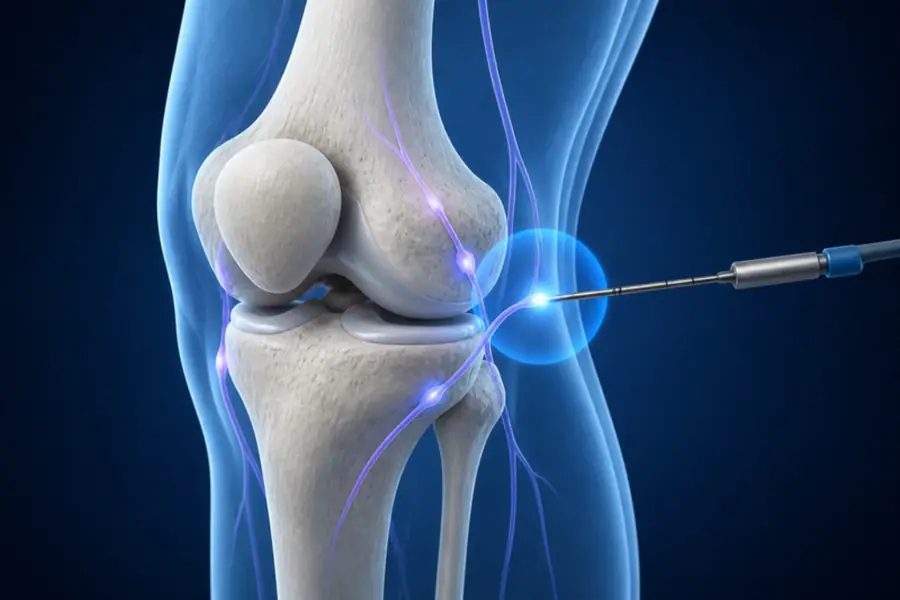
What is Nerve block?
The most widely used nerve block in headache medicine is the greater occipital nerve (GON) block. The greater occipital nerve emerges at the base of the skull and supplies sensation to the back of the head. It connects with the trigeminal system in the brainstem, so blocking it can influence not only pain at the back of the head but also migraine and cluster pain felt around the forehead and eye.
The aim of a nerve block is to temporarily “calm” over-sensitive pain pathways and break the pain cycle. Although the anaesthetic itself lasts only a few hours, the reduction in pain often continues for days or weeks.
Other blocks used for head and facial pain include the lesser occipital, supraorbital and supratrochlear (forehead), auriculotemporal (temple) and sphenopalatine ganglion blocks. The nerve targeted depends on where and what type the pain is.
What is occipital neuralgia?
Occipital neuralgia causes sharp, shooting, electric or burning pain starting at the base of the skull and spreading over the back of the head towards the top. Light touch, such as brushing hair or resting the head on a pillow, can trigger it. Pressing over the occipital nerve reproduces the pain. An occipital nerve block both confirms the diagnosis and treats it.
Which medicines are used?
Short- and long-acting local anaesthetics are used. In some situations — particularly cluster headache — a small amount of steroid is added to prolong the effect. Whether to add a steroid depends on the type of headache and conditions such as diabetes or high blood pressure.
Which conditions is it used for?
Nerve blocks may be considered for:
- Chronic migraine and very frequent migraine attacks
- Cluster headache, especially as a bridge at the start of a cluster period
- Occipital neuralgia
- Support during withdrawal from medication-overuse headache
- Some facial pains and neck-related (cervicogenic) headaches
Who is Nerve block suitable for?
- People with frequent headaches despite their current medication
- Situations in which attacks need to be brought under control quickly
- Special circumstances such as pregnancy, when many medicines cannot be used (local anaesthetic only, after specialist assessment)
- Bridging treatment while waiting for a preventive medicine to work
Who should not have it?
- Infection or an open wound at the injection site
- Allergy to local anaesthetics
- A defect in the skull bone at the site (e.g. after surgery)
- An uncontrolled bleeding disorder
Assessment before the procedure
Before the block, the type of headache is confirmed by neurological examination, including tenderness over the occipital nerves and the pattern of pain. We ask about medicines, allergies and bleeding problems; if a steroid is planned, diabetes and uncontrolled blood pressure are taken into account.
On the day of the block, your pain is scored from 0 to 10 and re-scored in the minutes and days afterwards. In some patients the block itself helps with diagnosis: a clear reduction in pain shows that the pain is carried by that nerve.
How is Nerve block performed?
- You sit with your head tilted slightly forward
- The point where the nerve emerges is located by touch, or with ultrasound guidance if needed
- After cleaning the skin, a very fine needle is used to inject a small amount of local anaesthetic
- Usually both sides are treated; in cluster headache the painful side is targeted
- The back of the head becomes numb within a few minutes
Ultrasound guidance
In some patients, especially where the nerve lies deeper, the block is done under ultrasound. This shows in real time how close the needle and medicine are to the nerve, allowing a more targeted injection with a smaller dose.
A block can be a one-off or part of a series repeated weeks or months apart in chronic headache. It is usually combined with preventive treatment and lifestyle measures rather than used alone.
Procedure time and your stay in Istanbul
The block takes 5–10 minutes, followed by 15–20 minutes of observation; you can return to normal activities immediately.
For patients from abroad, the consultation and the block can be done on the same day. Assessing the effect and planning further blocks can continue online.
After the procedure
- Numbness at the back of the head for a few hours is normal
- You can go back to normal activities and drive the same day
- Mild tenderness at the injection site may last a day or two
- Record in your headache diary how much and how long the pain eased
How much and for how long the pain improves helps plan the next step: if the effect is short, a different nerve or medicine combination, or another treatment, may be considered.
Possible side effects and risks
Nerve blocks are low-risk procedures. Side effects are usually mild and temporary:
- Pain or bruising at the injection site
- Brief dizziness or feeling faint, especially in people who are anxious about needles
- If a steroid is added, rarely local hair loss or thinning of the skin at the site
- Very rarely infection or an allergic reaction
You do not need to fast beforehand; a light breakfast actually reduces the chance of feeling faint. If you are nervous about needles, tell us — the block can be done lying down.
Frequently asked questions about Nerve block
Does an occipital nerve block help migraine?
Because the occipital nerve is connected with the trigeminal system in the brainstem, blocking it can reduce pain in many people with migraine and cluster headache. How much it helps and for how long varies between individuals.
How long does a nerve block last?
The anaesthetic works for a few hours, but pain relief often lasts days to weeks. In chronic headache the block can be repeated at intervals.
Is a nerve block painful?
A very fine needle is used, so you feel a brief sting and pressure. The procedure takes a few minutes and most people tolerate it easily.
Can a nerve block be done in pregnancy?
Because many headache medicines cannot be used in pregnancy, an occipital nerve block with local anaesthetic only can be an option for selected patients. The decision is made together with the obstetrician.
How many sessions will I need?
Some people need only one, while chronic headache may be treated with a series of blocks weeks or months apart. The number depends on your response.
What is the difference between a nerve block and Botox?
A nerve block temporarily stops pain signals in one nerve and works quickly. Migraine Botox is given at many points on the head and neck, takes a few weeks to work and lasts about three months. The two can be combined.
Can I fly after a nerve block?
Yes. After a short observation period you can return to normal activities, including travelling the same or the next day.
How often can a nerve block be repeated?
The interval depends on how long the effect lasts and on the medicine used. Blocks with local anaesthetic alone can be repeated more often, while those with added steroid are spaced further apart. Your doctor plans this individually.
Will a nerve block cure my headache?
A nerve block can bring substantial relief for many people, but the size and duration of the effect vary. It is usually one part of a broader plan that includes preventive treatment and lifestyle changes.
This page is for general information only and does not replace a medical consultation. Please consult a physician for diagnosis and treatment. Results vary from person to person.