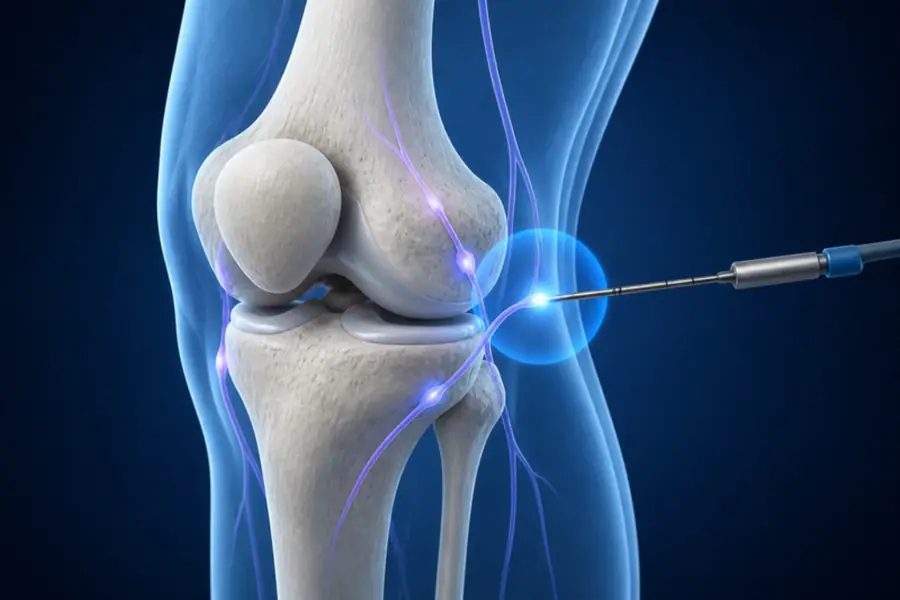
What is Cooled radiofrequency ablation?
Pain from a joint is carried to the brain by small sensory nerves. In radiofrequency ablation, a thin needle-like probe is placed next to these nerves under imaging guidance, and radiofrequency energy heats the tip to create a small, controlled lesion on the nerve. The pain signal is interrupted while the joint’s movement and muscle strength are preserved.
In cooled radiofrequency ablation, water circulates inside the probe and keeps the tip cool. This allows more energy to be delivered safely and creates a larger, more spherical treatment area. Because the nerves around joints such as the knee vary in their exact position, a larger lesion increases the chance of capturing the target nerve.
The treated nerves can regrow over time, so the effect is not permanent; however, many people experience meaningful pain relief for a long period, and the procedure can be repeated if the pain returns.
Where it is used
- Knee pain: knee osteoarthritis, or persistent pain after knee replacement
- Hip pain: osteoarthritis of the hip in people who are not ready for, or not suitable for, surgery
- Sacroiliac joint pain: pain in the buttock and lower back originating from the joint between the spine and pelvis
- Facet joint pain: neck or lower back pain arising from the small joints of the spine
How it compares with other treatments
- Medication: painkillers and anti-inflammatory drugs help many people, but long-term use can cause stomach, kidney or heart side effects, especially in older adults
- Steroid injections: can calm a painful joint for weeks, but the effect is often short and repeated injections are limited
- Hyaluronic acid and other joint injections: may help some people with early osteoarthritis
- Physiotherapy and exercise: essential at every stage; RF ablation often makes exercise easier by reducing pain
- Joint replacement: the definitive treatment for advanced osteoarthritis; RF ablation can bridge the time until surgery or help those who cannot have it
Cooled RF ablation therefore sits between conservative treatments and surgery. It is most useful for people who have tried simpler measures without sufficient benefit and who want a treatment with a short recovery.
Which conditions is it used for?
Cooled RF ablation may be considered if you have:
- Joint or spine pain lasting more than three to six months
- Pain that has not responded well to medication, physiotherapy, exercise and injections
- Pain limiting walking, climbing stairs or sleep
- A wish to delay or avoid joint replacement surgery
- Health conditions that make major surgery risky
- Persistent pain after knee replacement surgery
Who is Cooled radiofrequency ablation suitable for?
The best candidates are people whose pain clearly originates from a specific joint and who respond well to a diagnostic nerve block. The procedure is not suitable in the presence of active infection, uncontrolled bleeding disorders, or certain implanted electronic devices without special precautions; blood-thinning medicines need to be planned in advance.
Cooled RF ablation does not repair joint damage; it aims to reduce pain so that you can move and exercise more comfortably. Physiotherapy and weight control remain important.
Assessment before the procedure
Before the procedure, the source of the pain is clarified with a detailed history, examination and imaging (X-ray, MRI or ultrasound). Pain coming from the spine, nerves or other joints is distinguished from joint pain.
A diagnostic nerve block is then performed: a small amount of local anaesthetic is injected around the target sensory nerves. If the pain decreases significantly in the following hours, the nerves are confirmed as the source of the pain and cooled RF ablation is likely to help.
How is Cooled radiofrequency ablation performed?
- You lie in a comfortable position; the skin is cleaned and numbed with local anaesthetic
- Under fluoroscopy (X-ray) or ultrasound guidance, the probes are placed next to the target nerves
- Sensory and motor testing confirms the correct position and that no motor nerve is affected
- The cooled RF energy is applied to each nerve for about two and a half minutes
- The probes are removed and a small dressing is applied
- You rest for a short time and go home on the same day with a companion
The procedure is performed in a fully equipped procedure room, in collaboration with experienced interventional pain specialists when required.
Procedure time and your stay in Istanbul
The procedure takes 45–90 minutes depending on the number of nerves treated. Pain relief usually begins within one to three weeks and may last from six months to a year or more.
For international patients, the consultation, diagnostic block and procedure can usually be planned in 1–2 days in Istanbul. Follow-up continues online.
After the procedure
- Take it easy on the day of the procedure; light walking is encouraged
- Most people return to normal daily activities within a day or two
- Mild soreness at the needle sites may last a few days
- Start or continue physiotherapy and strengthening exercises as recommended
- A follow-up assessment is planned at around 4–6 weeks
Possible side effects and risks
Cooled RF ablation is generally safe. Possible side effects include temporary pain or bruising at the needle site, temporary numbness or burning sensation in the skin, and very rarely infection, bleeding or nerve injury. A temporary increase in pain for a few days is not unusual. Not everyone responds, and the duration of relief varies from person to person.
Frequently asked questions about Cooled radiofrequency ablation
Is cooled RF ablation painful?
The skin is numbed with local anaesthetic and mild sedation can be used if needed. Most people feel pressure and warmth rather than significant pain.
How long does the relief last?
Relief typically lasts from six months to a year or longer. Because the nerves can regrow, pain may return over time; the procedure can then be repeated.
Does it replace knee replacement surgery?
No. It does not repair the joint, but it can reduce pain in people who are not ready for or not suitable for surgery, and in some people with persistent pain after knee replacement.
Why is a diagnostic block needed first?
The diagnostic block confirms that the targeted nerves are responsible for your pain. If the block does not reduce the pain, RF ablation is unlikely to help.
Can I walk after the procedure?
Yes. You can walk on the same day. You should not drive yourself home, and heavy activity should be avoided for a day or two.
What is the difference between conventional and cooled RF?
Cooled RF uses water-cooled probes to create a larger treatment area, which increases the chance of capturing nerves whose position varies, particularly around the knee and sacroiliac joint.
Can I travel home soon after the procedure?
Most people can travel within one or two days. Your plan, including when it is safe to fly, is discussed before the procedure.
Can I have the procedure if I take blood thinners?
Often yes, but blood-thinning medicines may need to be paused or adjusted in advance in consultation with the doctor who prescribed them. Please tell us about all your medicines when planning the procedure.
Is cooled RF ablation suitable for people with diabetes?
Yes, diabetes is not a contraindication, but blood sugar should be well controlled to reduce the risk of infection. If a steroid is used in the diagnostic block, blood sugar may rise temporarily.
This page is for general information only and does not replace a medical consultation. Please consult a physician for diagnosis and treatment. Results vary from person to person.