What is EMG and nerve conduction studies?
The term “EMG” is often used for two related tests that are usually performed together:
Nerve conduction studies (NCS)
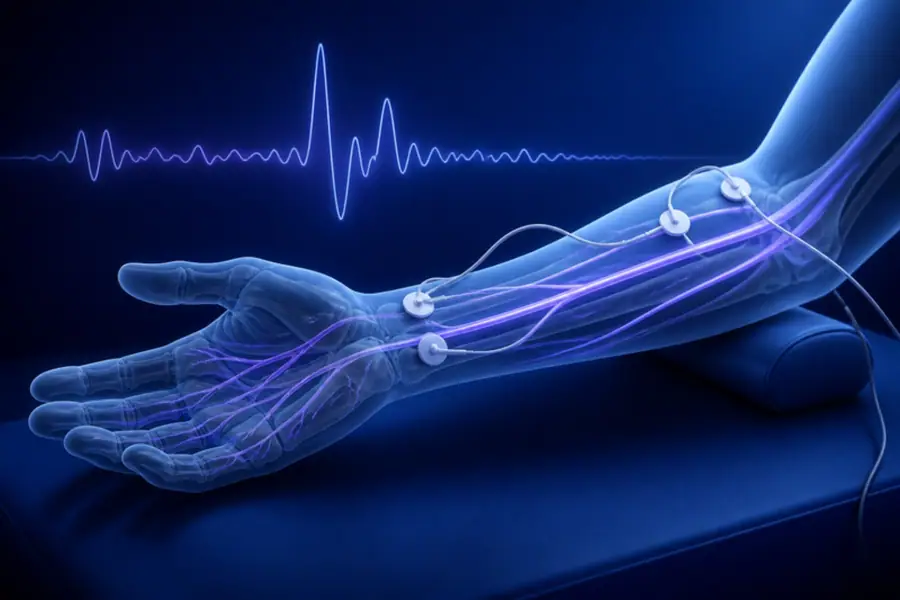
Small surface electrodes are placed on the skin over a nerve and muscle. A brief, mild electrical impulse is applied to the nerve, and the speed and strength of the signal travelling along the nerve are measured. Slowed conduction suggests damage to the nerve’s insulating layer (myelin) or compression, while a reduced signal size suggests loss of nerve fibres.
Needle electromyography (EMG)
A very thin needle electrode is inserted into selected muscles to record their electrical activity at rest and during contraction. This shows whether weakness is caused by a problem in the nerve supplying the muscle or in the muscle itself, and whether the damage is recent or old.
Together, these tests can locate the problem precisely — in the nerve root near the spine, in a nerve in the arm or leg, at the junction between nerve and muscle, or in the muscle — and show how severe it is. This information guides treatment decisions, including whether surgery is needed.
Why EMG is performed by a neurologist
EMG is not a test that simply produces a printout. The neurologist chooses which nerves and muscles to examine based on your symptoms and the findings as the test progresses. For example, if numbness of the hand turns out not to be caused by carpal tunnel syndrome, the test is extended to look for a pinched nerve in the neck or a more widespread neuropathy. This dynamic approach makes the result much more useful for treatment decisions.
When is it requested?
- Numbness, tingling or pins and needles in the hands or feet
- Night-time numbness of the hand waking you from sleep
- Burning pain in the feet, especially in diabetes
- Pain radiating down the arm or leg from the neck or lower back
- Weakness of the hand, arm, foot or leg; foot drop
- Muscle wasting, cramps or twitching
- Fatigable weakness, drooping eyelids or double vision
- Facial weakness (Bell’s palsy) follow-up
- Assessment of nerve injury after trauma or surgery
Who needs EMG and nerve conduction studies?
EMG and nerve conduction studies can be performed at any age. Please inform us in advance if you take blood-thinning medication, have a bleeding disorder, have a pacemaker or implanted defibrillator, or have swelling of the limbs — the test can still usually be done with appropriate precautions.
How to prepare
- Wash your skin and do not apply cream, lotion or oil on the day of the test
- Keep your hands and feet warm; cold limbs slow nerve conduction
- Wear loose clothing that can be rolled up easily
- Take your usual medicines; for myasthenia testing, you may receive specific instructions
- Bring previous EMG reports and MRI results of the neck or lower back
- Bring a list of your medicines and blood test results (for example blood sugar and B12)
How is EMG and nerve conduction studies performed?
- You lie comfortably on a bed
- Your limb temperature is checked and warmed if needed
- For nerve conduction studies, surface electrodes are placed and brief electrical pulses are applied; each feels like a small tap or quick tingle
- For needle EMG, a fine sterile disposable needle is inserted into a few muscles; you are asked to relax and then gently tense the muscle
- The neurologist watches and listens to the signals on the screen during the test
- The number of nerves and muscles tested depends on your symptoms
Because the test is performed and interpreted by the neurologist, it can be adapted during the examination to answer the clinical question as precisely as possible.
Duration, results and your stay in Istanbul
The test usually takes 30–60 minutes. The preliminary results can often be discussed immediately after the test, and the written report is prepared shortly afterwards.
For international patients, the consultation and EMG fit easily into one day in Istanbul, with the results explained in English.
After the test
- You can return to normal activities immediately
- Mild soreness or small bruises where the needle was inserted may last a day or two
- The results are discussed with you and a treatment plan is made
- A repeat EMG may be suggested to monitor recovery, for example after surgery for carpal tunnel syndrome
Understanding the results
The report states whether the findings are normal, whether there is nerve compression, neuropathy, nerve root damage or muscle disease, where the problem is located, how severe it is and whether there are signs of ongoing damage or recovery. These findings are combined with your MRI and blood tests to decide on treatment — for example splinting, medication, physiotherapy, injections or referral for surgery.
Risks and safety
EMG and nerve conduction studies are safe. The electrical pulses may feel uncomfortable but are brief and harmless. The needle part may cause mild pain, a small bruise or, very rarely, minor bleeding or infection. Single-use sterile needles are always used.
Frequently asked questions about EMG and nerve conduction studies
Does EMG hurt?
Most people describe the nerve conduction part as a series of quick, tingling taps, and the needle part as a mild discomfort similar to an injection. Most tolerate it well, and the test can be paused at any time.
Can EMG show carpal tunnel syndrome?
Yes. Nerve conduction studies are the main test for carpal tunnel syndrome and show how severely the median nerve is compressed, which helps decide between splints, injections and surgery.
Can EMG detect a herniated disc?
EMG cannot see the disc itself — that is the role of MRI — but it can show whether a nerve root is damaged and how severely. This helps determine whether the disc seen on MRI is actually causing the symptoms.
Is EMG used for diabetic neuropathy?
Yes. Nerve conduction studies confirm neuropathy, show its type and severity, and can be repeated to monitor progression.
Can I take my medication before the test?
Yes, usually. Please tell us if you take blood thinners or medicines for myasthenia gravis, as specific instructions may be needed.
Is EMG safe with a pacemaker?
In most cases yes, with precautions. Please tell us in advance so the test can be planned appropriately.
How soon will I get the results?
The main findings can often be explained right after the test, and the written report follows shortly afterwards.
Do I need an EMG before carpal tunnel surgery?
Yes, in most cases. EMG confirms the diagnosis, shows how severe the compression is and excludes other causes such as a pinched nerve in the neck or neuropathy, which might otherwise lead to unnecessary surgery.
Why should my hands and feet be warm?
Cold slows nerve conduction and can make the results look abnormal. If your limbs are cold, they are warmed before the test.
Can EMG distinguish nerve disease from muscle disease?
Yes. The pattern of electrical activity in the muscles differs depending on whether weakness is caused by damage to the nerve supplying the muscle or by a disease of the muscle itself. This is one of the most important uses of needle EMG.
Will I need a repeat EMG?
Sometimes. A repeat test may be suggested to monitor recovery after nerve injury or surgery, or to follow the progression of neuropathy over time.
This page is for general information only and does not replace a medical consultation. Please consult a physician for diagnosis and treatment. Results vary from person to person.