What is Bell’s palsy (facial paralysis)?
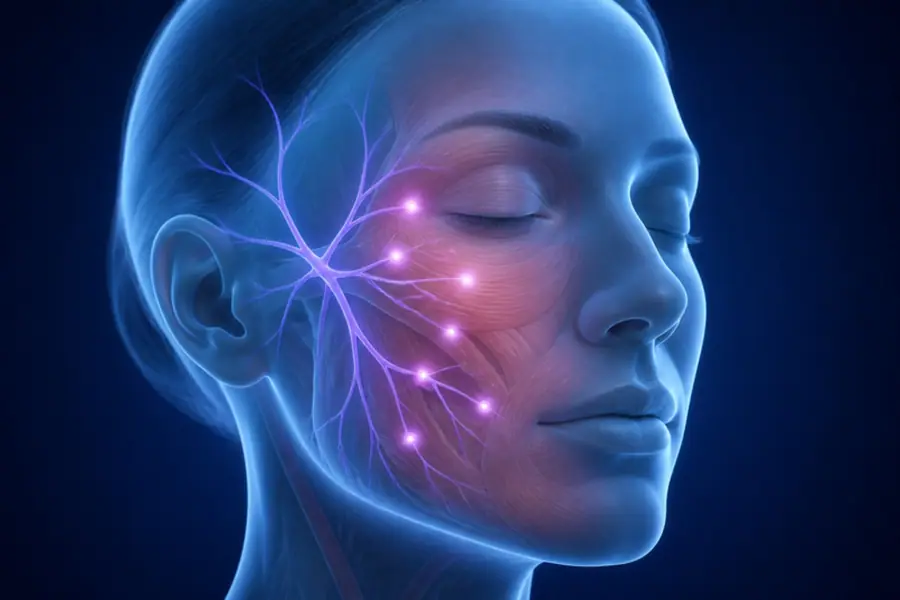
The facial nerve controls the muscles of facial expression, eye closure and the corner of the mouth, and also carries taste from the front of the tongue and controls tear and saliva production. In Bell’s palsy, the nerve becomes inflamed and swollen within the narrow bony canal through which it passes, which disrupts its function.
The exact cause is unknown, but viral infections — particularly herpes simplex — are thought to play a role. Bell’s palsy is more common in pregnancy, diabetes and after upper respiratory infections. It can occur at any age.
Not every facial paralysis is Bell’s palsy
Facial weakness can also be caused by a stroke, shingles affecting the ear (Ramsay Hunt syndrome), Lyme disease, middle ear infections, tumours or trauma. In a stroke, the forehead is usually spared and there are often other symptoms such as arm weakness or speech difficulty — this is an emergency. A careful examination distinguishes these conditions.
How the facial nerve recovers
When the nerve is only mildly inflamed, function returns as the swelling settles, often within weeks. When nerve fibres have been damaged, they must regrow from the point of injury to the facial muscles, which takes months. During this regrowth, some fibres may reach the wrong muscles, which explains synkinesis. EMG helps to distinguish between these situations and set realistic expectations.
Symptoms of Bell’s palsy (facial paralysis)
- Sudden weakness of one side of the face, developing over hours to two days
- Inability to close the eye completely
- Drooping of the corner of the mouth, drooling
- Inability to raise the eyebrow or wrinkle the forehead on one side
- Pain behind the ear
- Altered taste
- Sensitivity to sound on one side
- Dry eye or excessive tearing
If facial weakness is accompanied by weakness of an arm or leg, speech difficulty or confusion, call 112 immediately — it may be a stroke.
When should you see a neurologist?
- Sudden facial weakness — as early as possible, ideally within 72 hours
- Facial weakness with a rash or blisters in the ear
- Incomplete recovery after three months
- Abnormal movements of the face during recovery (synkinesis)
- Recurrent facial paralysis
How is Bell’s palsy (facial paralysis) diagnosed?
Bell’s palsy is diagnosed by examination after excluding other causes.
- Neurological examination to confirm that the forehead is affected and that there are no other neurological signs
- Ear examination to look for shingles or infection
- Blood tests for diabetes and, if relevant, Lyme disease
- MRI if the course is atypical, recovery does not begin within three months or other nerves are affected
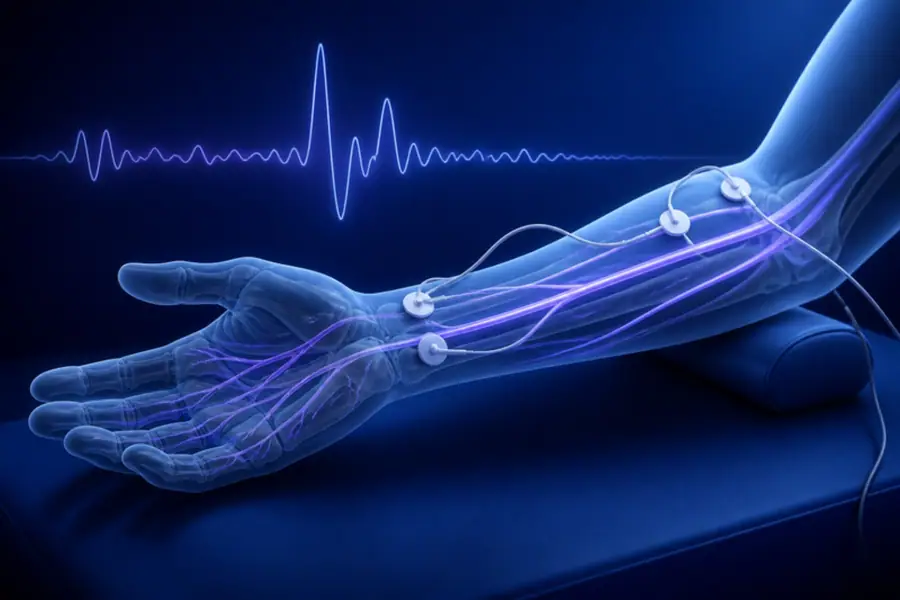
- EMG of the facial nerve — performed 7–14 days after onset — to assess the degree of nerve damage and predict recovery
How is Bell’s palsy (facial paralysis) treated?
Early treatment
Corticosteroids started within 72 hours of onset improve the chance of complete recovery. In severe cases or when a viral cause is suspected, an antiviral medicine may be added.
Eye protection
Because the eye may not close properly, it must be protected from drying and injury: lubricating eye drops during the day, ointment at night, taping the eye closed while sleeping and sunglasses outdoors. Eye pain or redness should be assessed promptly.
Rehabilitation and later treatment
Gentle facial exercises and massage may help during recovery. If recovery is incomplete, Botox injections can treat synkinesis (unwanted movements, for example the eye closing when smiling) and improve facial symmetry. Surgical options are available for persistent paralysis.
Protecting the eye at night
At night, apply a thick lubricating ointment and close the eyelid gently with special eye tape or a moisture chamber. Avoid pressing anything directly onto the eye. If the eye becomes red, painful or vision becomes blurred, seek prompt assessment, as the cornea may be irritated.
Treatment timeline and your stay in Istanbul
Most people begin to recover within two to three weeks, and about 70–85% recover completely within three to six months. Recovery may be slower and less complete in severe cases.
For international patients, the consultation, examination and EMG can be completed in one day in Istanbul; recovery can then be followed up online.
Signs of recovery
The first signs of recovery are often a slight movement at the corner of the mouth or improved eye closure. Recovery usually progresses steadily once it begins. If there is no improvement at all after three to four weeks, EMG and, in some cases, MRI are recommended.
Follow-up after treatment
- Protect the eye carefully until it closes fully
- Take medication exactly as prescribed
- Avoid forceful facial exercises in the early phase
- Follow-up at around 2–4 weeks and 3 months
- EMG may be repeated to monitor recovery
Emotional impact
Changes in facial appearance can affect confidence, social life and work. It is normal to feel anxious or low. Knowing that most people recover, and that there are treatments for incomplete recovery, can help. Support is offered as part of follow-up.
Risks and what to watch for
Possible long-term complications include incomplete recovery, synkinesis, facial muscle tightness and eye damage due to incomplete closure. Corticosteroids may temporarily raise blood sugar and affect sleep and mood; blood sugar is monitored in people with diabetes.
Frequently asked questions about Bell’s palsy (facial paralysis)
Will my face recover completely?
Most people recover fully, especially with mild weakness and early treatment. EMG can help predict recovery in more severe cases.
Is Bell’s palsy a stroke?
No. Bell’s palsy affects the facial nerve, not the brain. However, a stroke can also cause facial weakness, so urgent assessment is important.
Why is early treatment important?
Corticosteroids are most effective when started within 72 hours of onset.
Can Bell’s palsy come back?
It recurs in a small proportion of people. Recurrent or bilateral facial paralysis requires further investigation.
Can cold air cause Bell’s palsy?
There is no clear evidence that cold air causes Bell’s palsy, although many people associate it with exposure to cold or drafts.
What is synkinesis?
During recovery, nerve fibres can regrow to the wrong muscles, causing unwanted movements — for example the eye closing when smiling. Botox and specific exercises can help.
Is Bell’s palsy common in pregnancy?
It is more common in late pregnancy and early after delivery. Treatment is adjusted for safety.
When should EMG be done?
EMG is most informative 7–14 days after onset, when it can show the degree of nerve damage and help predict recovery.
Can I travel with Bell’s palsy?
Yes, but protect the eye carefully during the flight with drops and ointment, as cabin air is very dry.
Can children have Bell’s palsy?
Yes, and children usually recover very well. Other causes such as ear infections and Lyme disease are carefully checked.
Should I massage my face?
Gentle massage and light exercises are fine. Avoid forceful, repetitive exercises or electrical stimulation in the early phase, as they may promote synkinesis.
Can I drive with Bell’s palsy?
If the eye does not close fully or becomes dry and irritated, vision may be affected. Avoid driving until you can protect the eye adequately and see comfortably.
Can Bell’s palsy affect both sides of the face?
Very rarely. Facial weakness on both sides requires further investigation for other causes, such as Guillain–Barré syndrome or Lyme disease.
This page is for general information only and does not replace a medical consultation. Please consult a physician for diagnosis and treatment. Results vary from person to person.