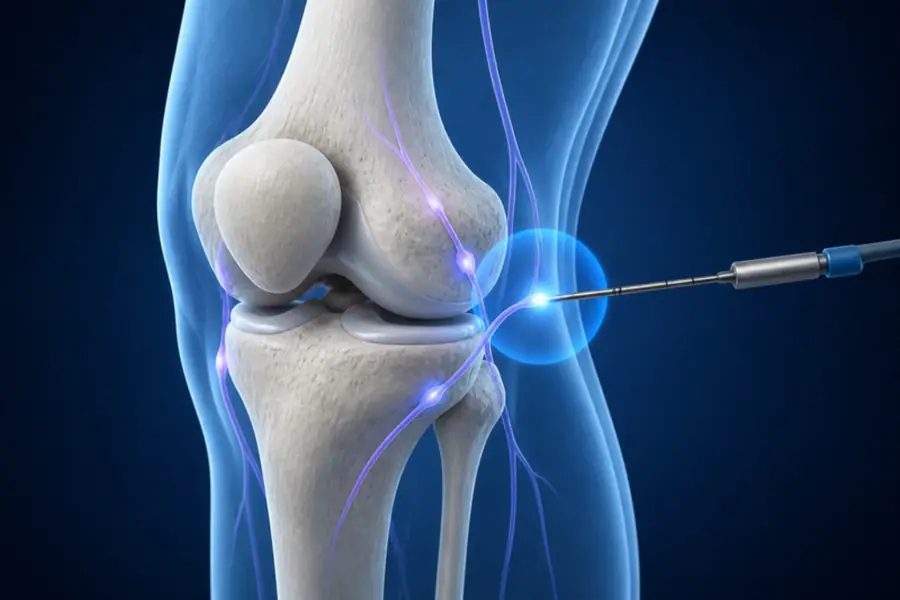
What is Trigeminal neuralgia?
The trigeminal nerve carries sensation from the face to the brain. It has three branches: the upper branch serves the forehead and eye area, the middle branch the cheek, upper lip and upper teeth, and the lower branch the jaw, lower lip and lower teeth. In trigeminal neuralgia, this nerve sends abnormal pain signals in sudden bursts.
In most cases (classical trigeminal neuralgia) a blood vessel presses on the nerve where it leaves the brainstem. Over time this pressure damages the nerve’s insulating layer (myelin), making the nerve fire abnormally. Less often, trigeminal neuralgia is caused by another condition — for example multiple sclerosis or a benign tumour pressing on the nerve (secondary trigeminal neuralgia). In some people no cause is found.
Trigeminal neuralgia is more common after the age of 50 and slightly more common in women. When it starts at a younger age, or when there is numbness of the face or pain on both sides, secondary causes such as multiple sclerosis must be carefully investigated.
Because the pain is often felt in the teeth or jaw, many patients first see a dentist, and some even have healthy teeth treated or extracted before the correct diagnosis is made. Recognising the typical pattern of the pain is therefore important.
Symptoms of Trigeminal neuralgia
- Sudden, stabbing or electric-shock-like pain lasting from a fraction of a second up to two minutes
- Pain usually on one side of the face, in the cheek, jaw, teeth, lips or around the eye
- Attacks triggered by light touch, washing the face, shaving, make-up, talking, eating, brushing the teeth or wind
- Many attacks in a day, sometimes in rapid succession
- Pain-free periods between attacks (in classical forms)
- Periods of remission lasting weeks or months, followed by recurrence
- Fear of eating or talking, weight loss and low mood during active periods
Atypical forms
In some people a dull, burning, constant background pain is present between the sharp attacks. This form may respond differently to treatment and requires careful assessment.
When should you see a neurologist?
A neurological assessment is recommended if you have:
- Brief, intense facial pain triggered by touching, chewing or talking
- Facial pain that has not been explained by a dental examination
- Facial pain that no longer responds to your current medication
- Numbness of the face, double vision, hearing loss or weakness together with the pain
- Facial pain starting before the age of 40, or pain on both sides
- Known multiple sclerosis with new facial pain
How is Trigeminal neuralgia diagnosed?
The diagnosis is made mainly from the description of the pain: its location, character, duration, triggers and the pain-free intervals. A detailed neurological examination checks sensation of the face, the corneal reflex, chewing muscles and other cranial nerves.
- Brain MRI with special sequences to look for blood vessel compression of the trigeminal nerve, multiple sclerosis plaques or a tumour
- Dental and ENT assessment if needed, to exclude dental causes, sinus disease or jaw joint problems
- Blood tests before starting medication, to check blood count, sodium levels and liver function
Other causes of facial pain
- Dental pain: usually throbbing, triggered by hot or cold, located in a single tooth
- Temporomandibular joint disorder: jaw pain and clicking related to chewing
- Postherpetic neuralgia: burning pain after shingles in the face
- Cluster headache: severe pain around one eye lasting 15–180 minutes with a watery eye and runny nose
- Persistent idiopathic facial pain: constant pain without the typical electric attacks
How is Trigeminal neuralgia treated?
Medication
Medication is the first step for most people. Anti-seizure medicines that calm overactive nerves are the mainstay of treatment and often reduce attacks considerably within days. The dose is increased gradually to the lowest effective level, and blood tests are checked regularly. If one medicine is not tolerated, other options can be used alone or in combination.
Nerve blocks
During a severe flare, injections of local anaesthetic around the branches of the trigeminal nerve can provide temporary relief while the medication dose is adjusted.
Interventional and surgical options
If medication does not control the pain or causes significant side effects, other options are discussed:
- Microvascular decompression: a neurosurgical operation that separates the blood vessel from the nerve; it offers long-term relief in suitable patients with vascular compression
- Percutaneous procedures: radiofrequency thermocoagulation, balloon compression or glycerol injection at the base of the skull
- Stereotactic radiosurgery (Gamma Knife): focused radiation to the nerve root without an incision
The choice depends on age, general health, MRI findings and personal preference. When needed, referral is made to an experienced neurosurgery team.
Treatment timeline and your stay in Istanbul
The first consultation takes 30–45 minutes. If an MRI is needed, it can usually be arranged on the same or the next day. The effect of medication is often seen within days, while dose adjustment takes a few weeks.
For international patients, consultation, MRI and the start of treatment usually fit into 1–2 days in Istanbul; dose adjustments and follow-up can continue online in English.
Follow-up after treatment
- Keep a pain diary of attacks, triggers and medication doses
- Do not stop your medication suddenly; reductions are planned with your doctor
- Attend regular blood tests while on certain medicines
- If the pain goes into remission, the dose may be reduced slowly
- Seek review if the pain changes character or new symptoms such as numbness appear
Risks and what to watch for
Untreated trigeminal neuralgia can seriously affect eating, speaking, sleep and mood. The medicines used may cause dizziness, sleepiness, unsteadiness, low sodium levels, skin rashes or changes in liver function; these are monitored with regular check-ups and blood tests. Interventional and surgical treatments carry their own risks, such as facial numbness, and these are discussed in detail before any decision.
Frequently asked questions about Trigeminal neuralgia
Is trigeminal neuralgia dangerous?
Classical trigeminal neuralgia is not life-threatening, but the pain can be extremely severe. It is important to exclude secondary causes such as multiple sclerosis or a tumour with an MRI.
Why does my tooth hurt if it is a nerve problem?
The trigeminal nerve also carries sensation from the teeth and jaw, so the pain is often felt in the teeth. A dental examination is useful, but if the teeth are healthy and the pain is electric-shock-like, trigeminal neuralgia should be considered.
Can trigeminal neuralgia be cured?
Medication controls the pain in most people. Surgery to relieve blood vessel pressure on the nerve can provide long-term relief in suitable patients. Some people also have long spontaneous remissions.
Do ordinary painkillers work?
Usually not. Standard painkillers have little effect on trigeminal neuralgia; anti-seizure medicines that calm the nerve are much more effective.
Do I need an MRI?
Yes, an MRI is recommended for everyone with trigeminal neuralgia, to look for blood vessel compression and to exclude other causes such as multiple sclerosis or a tumour.
Can cold weather or wind trigger attacks?
Yes. Cold wind on the face is a common trigger. Covering the face with a scarf in cold weather may help to reduce attacks.
Can I come from abroad for treatment?
Yes. After an online review of your reports, consultation, MRI and the start of treatment can usually be completed in 1–2 days, with follow-up continuing online.
This page is for general information only and does not replace a medical consultation. Please consult a physician for diagnosis and treatment. Results vary from person to person.